


Originally described in
Proceedings of the United States National
Diagnosis
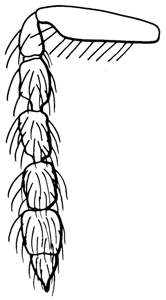
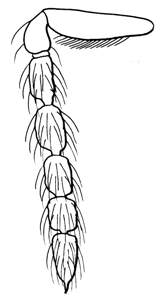
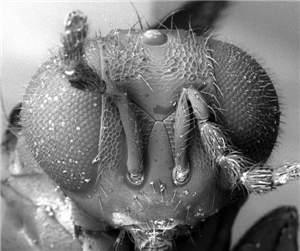
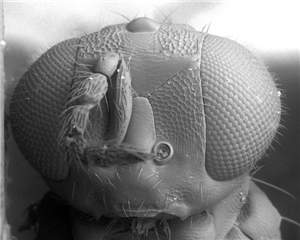
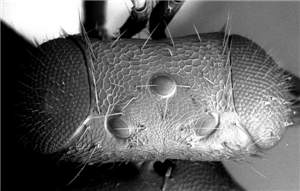
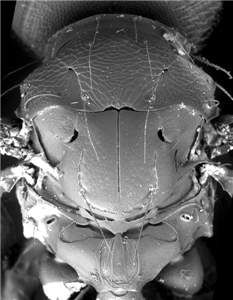
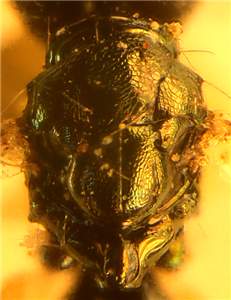
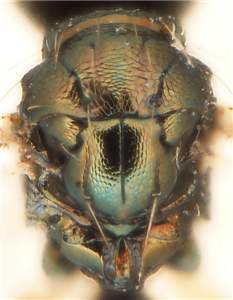
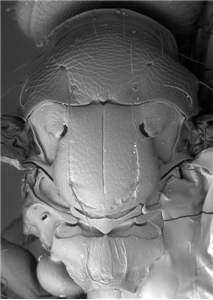
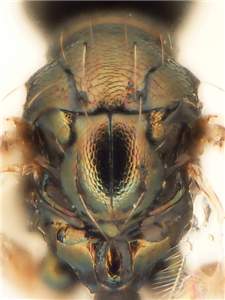
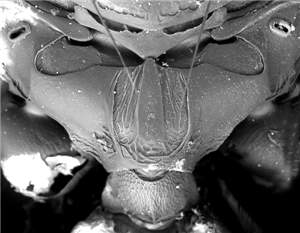
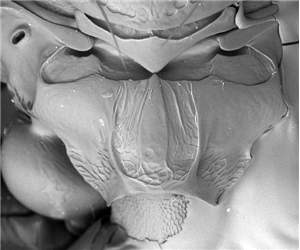
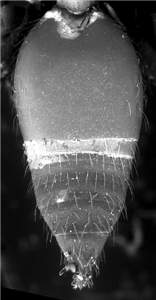
Female scape yellowish-white to dark brown; mesoscutum and scutellum golden-green or golden, mesoscutum with anterior 2/3 with raised and weak reticulation, posterior 1/3 with engraved and weak reticulation, scutellum with engraved and strong reticulation; propodeum with median area and median carina long, LC/WC = 3.9, median carina completely smooth (lectotype) or with posterior 1/5 reticulate (specimens from Brazil and Trinidad); propodeum with submedian grooves golden-purple and with weak sculpture, anterolateral foveas golden-green and smooth; gaster elongate-acuminate, MM/LG = 0.7, with 1st tergite with weak to strong punctures, round or slightly elongate. See also cockerelli and pilonensis.
Distribution
Brazil, Colombia, Costa Rica, Cuba, Dominican Republic, Guadeloupe, Jamaica, Puerto Rico, Trinidad & Tobago, Venezuela.
Biology
Apanteles (s.l.) sp. (Hymenoptera: Braconidae); Apanteles sp. on larva of Hesperiidae (Lepidoptera); Apanteles flaviventris on larva of Erinnyis alope (Lepidoptera: Sphingidae); Cotesia americana (Hymenoptera: Braconidae); from larvae of Astraptes talus (Lepidoptera: Hesperiidae); associated with Caligo ilioneus (Lepidoptera: Nymphalidae) on sugar cane (Saccharum officinarum) (Poaceae); Elasmopalpus lignosellus (Zeller) (Lepidoptera: Pyralidae).
Similar species in Lucid key
None.

Depository of primary type
United States National